种群危机现状Population Crisis
部分原生犬种正从牧区视野中消失Some Native Breeds Are Vanishing from Pastoral Areas
据走访监测,代表性区域纯种高原犬个体从 2018 年约 1280 只下降至 2024 年约 520 只,六年下降约 59%。核心原因包括无序杂交、栖息地变化与保护记录不足。
According to field monitoring, the number of purebred plateau canines in representative areas dropped from about 1,280 in 2018 to about 520 in 2024 — a decline of roughly 59% in six years. Core causes include unregulated crossbreeding, habitat change and insufficient protection records.
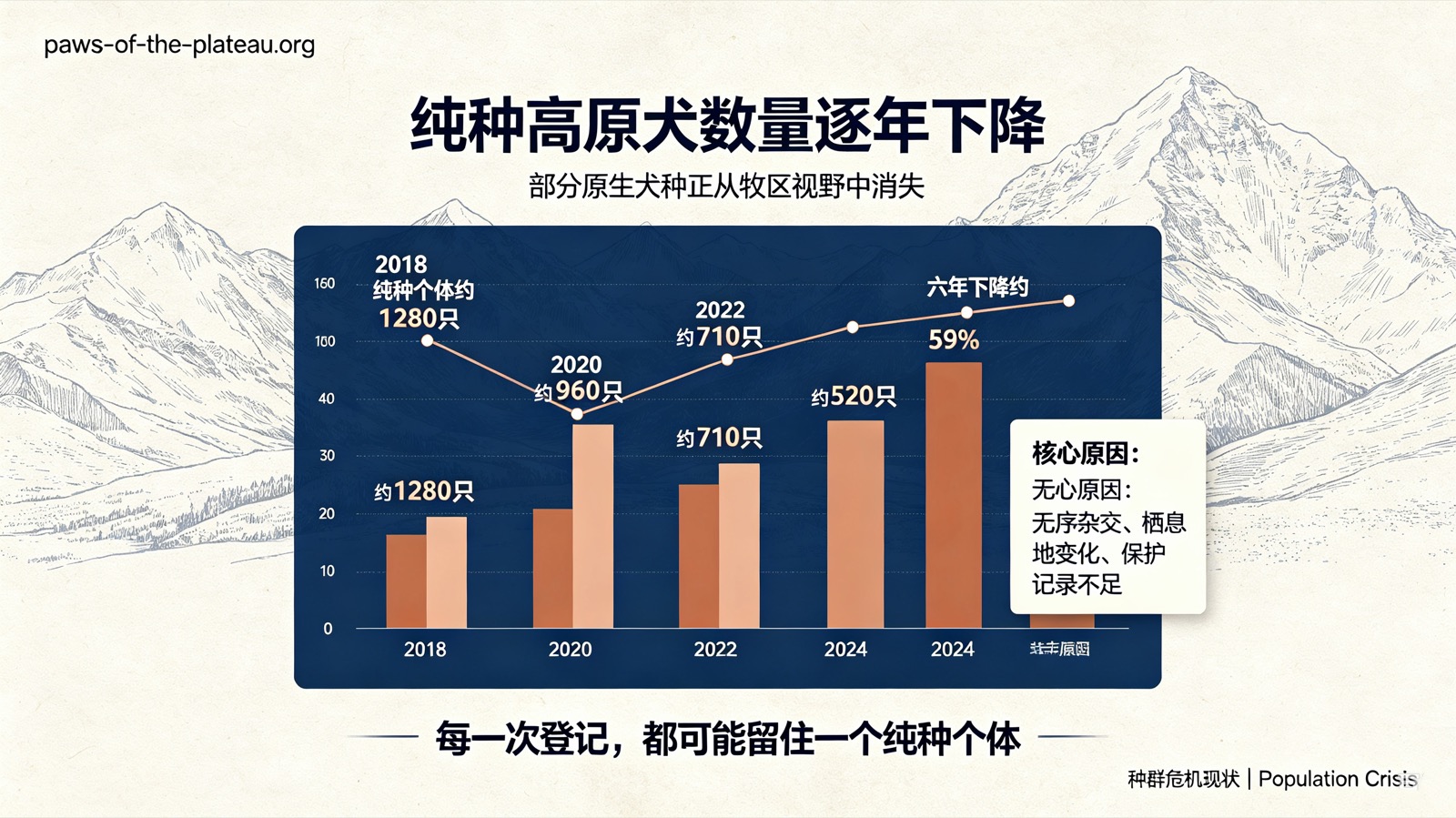
每一次登记,都可能留住一个纯种个体。Every registration may save a purebred individual.
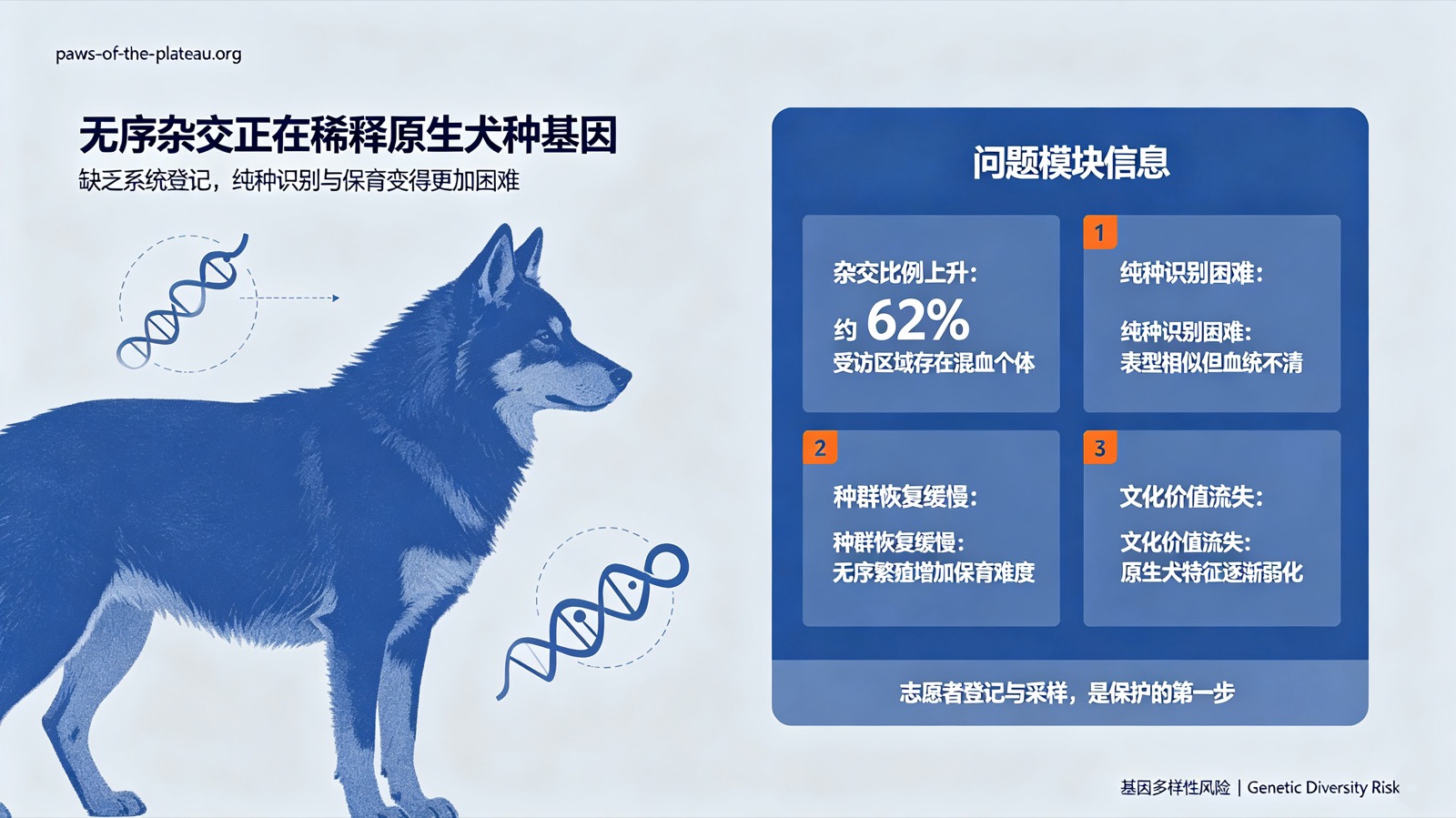
缺乏系统登记,纯种识别与保育变得更加困难:受访区域约 62% 存在混血个体;许多个体表型相似但血统不清,无序繁殖增加保育难度,原生犬特征逐渐弱化,文化价值随之流失。
Without systematic registration, purebred identification and conservation become ever harder: about 62% of surveyed areas have hybrid individuals; many dogs look similar but have unclear pedigrees; unregulated breeding complicates population recovery, and native traits — along with their cultural value — are gradually fading.
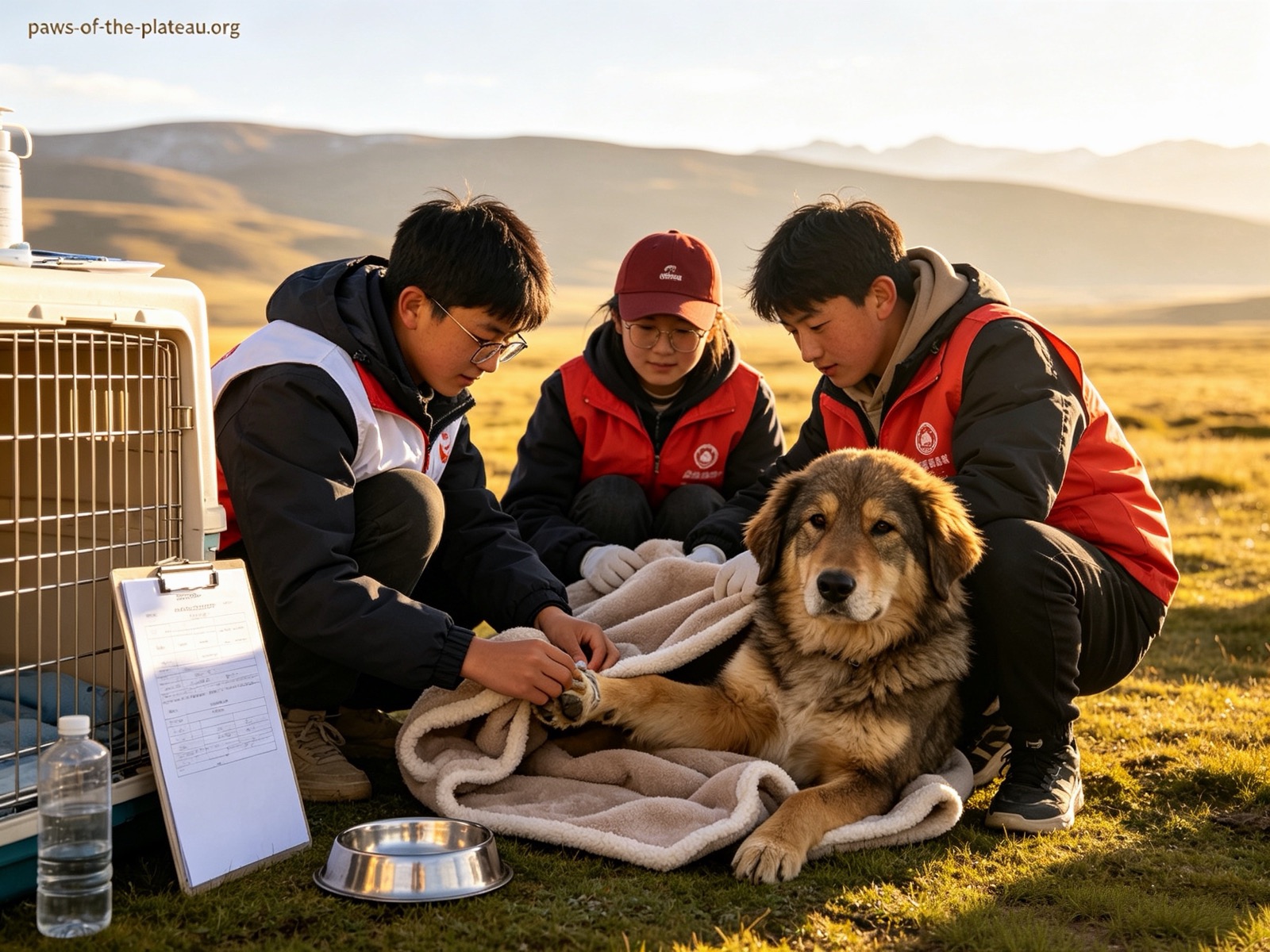
志愿者登记与采样,是保护的第一步。Volunteer registration and sampling is the first step of protection.
2024 年监测到流浪个体约 3400 只,其中伤病、老龄、幼崽等需优先救助的约 860 只,已完成安置的仅约 210 只。救助、安置与绝育免疫需要持续的志愿力量:基地容量与长期养护有限,牧区巡查与档案记录仍然不足。
In 2024, about 3,400 stray individuals were monitored; around 860 of them — the injured, elderly and puppies — need priority rescue, yet only about 210 have been resettled. Rescue, resettlement, sterilization and immunization require sustained volunteer support: base capacity and long-term care are limited, and pastoral patrols and record keeping remain insufficient.
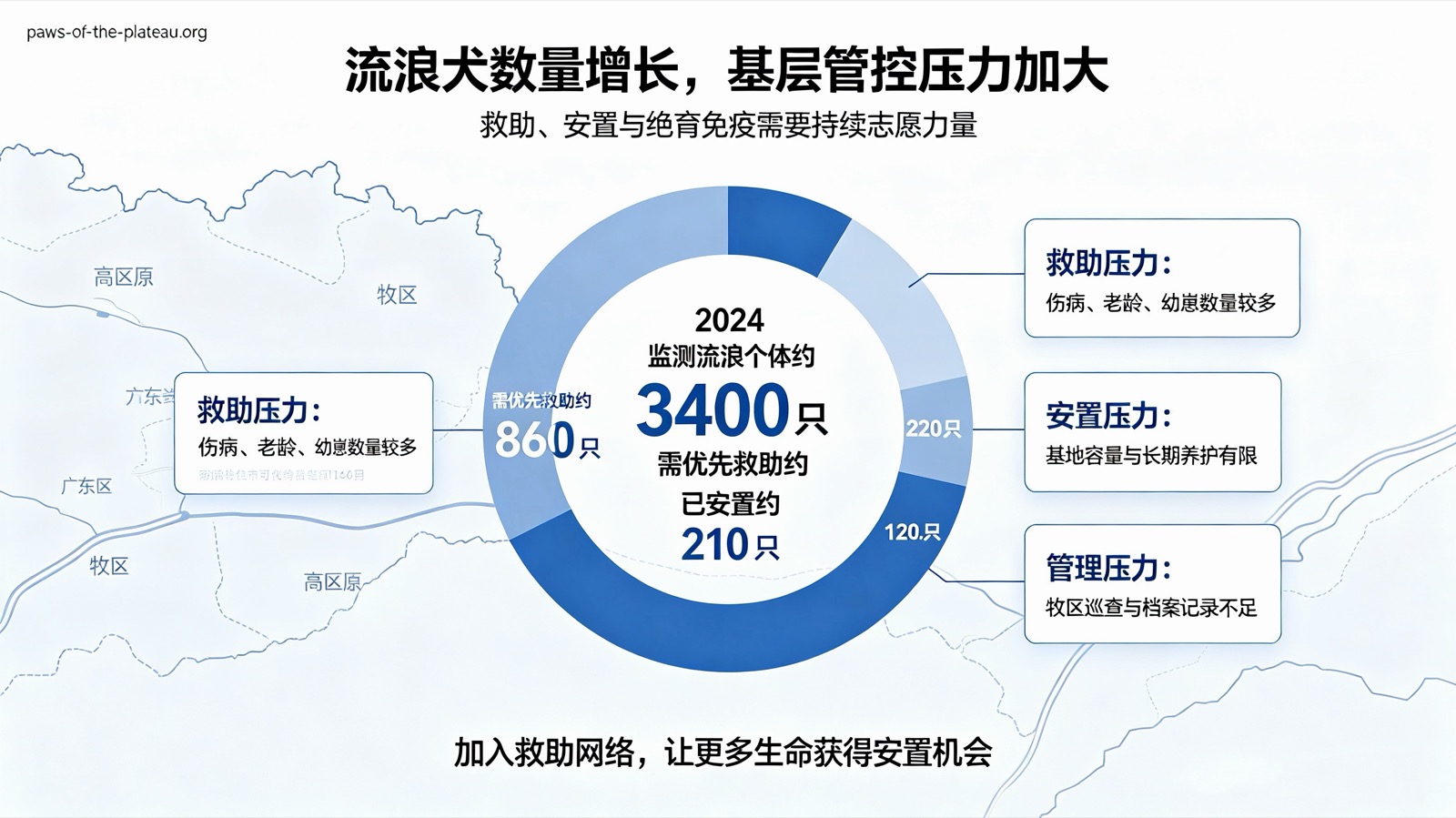
加入救助网络,让更多生命获得安置机会。Join the rescue network and give more lives a chance to be resettled.
疫苗接种、医疗记录与健康监测仍需加强:约 18% 的监测个体存在健康风险;约 45% 的基层区域救助点分布不足;部分偏远牧区疫苗覆盖率偏低;寒冷季节幼崽存活风险更高。
Vaccination, medical records and health monitoring must be strengthened: about 18% of monitored individuals carry health risks; about 45% of grassroots areas lack nearby rescue points; vaccination coverage remains low in some remote pastoral areas; and puppies face higher mortality risks in cold seasons.
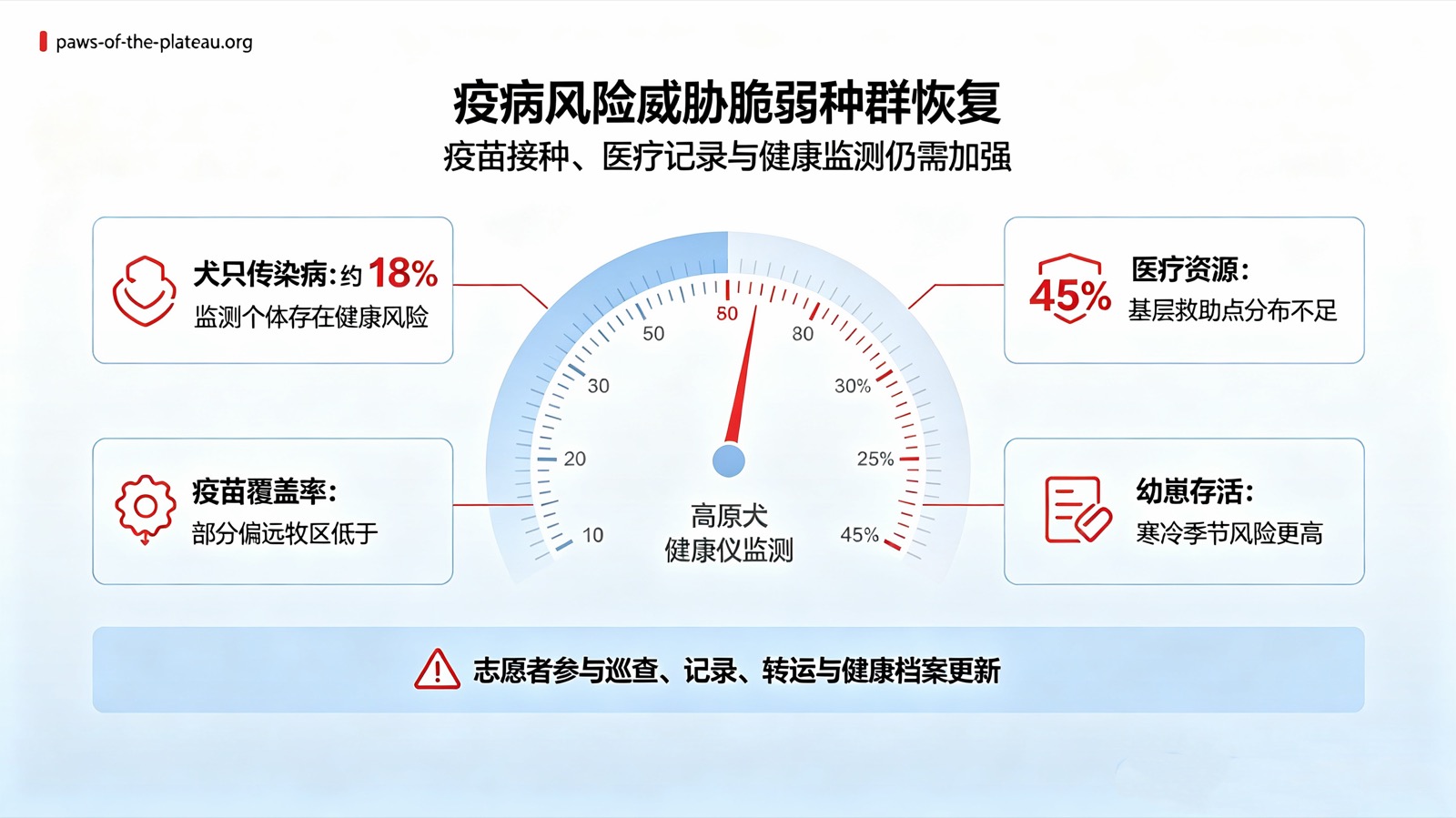
志愿者参与巡查、记录、转运与健康档案更新,是最直接的帮助。Volunteers help most directly through patrols, recording, transfers and health-file updates.
数据背后是鲜活的生命。了解科学保育知识,或以志愿者身份加入我们,都能让改变发生。
Behind the numbers are living creatures. Learning scientific conservation knowledge or joining us as a volunteer — both make change happen.
成为志愿者Become a Volunteer 学习保育知识Learn Conservation Knowledge